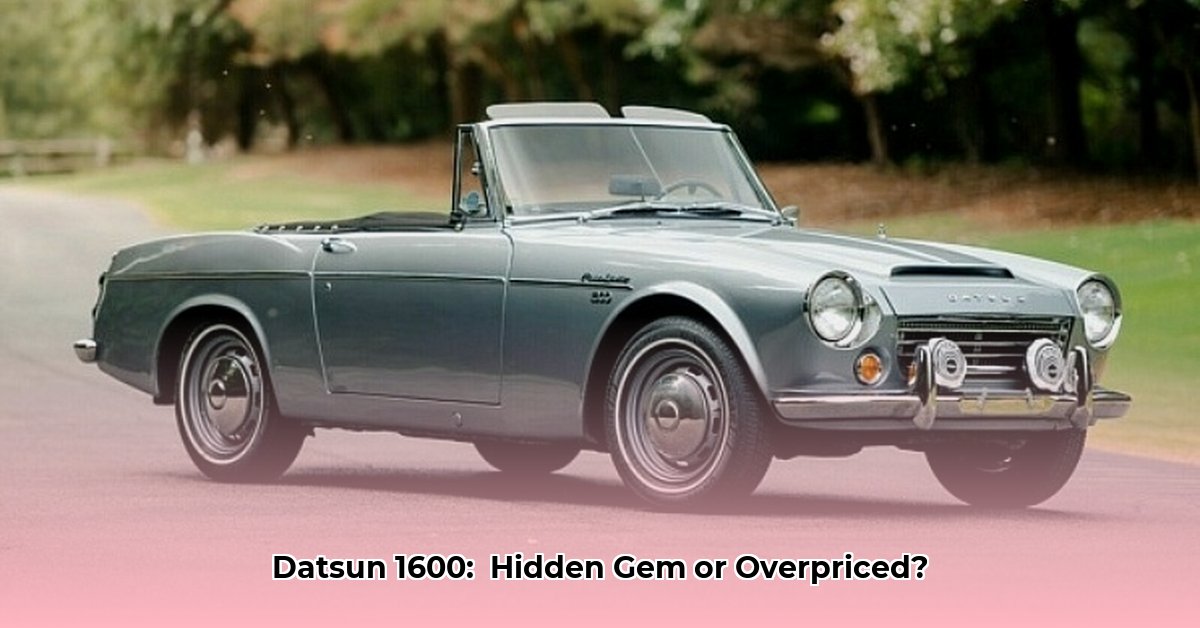
Datsun 1600: Your Guide to Finding the Perfect Classic
The Datsun 1600: a name that evokes images of sporty handling, classic styling, and a surprisingly robust engine. But navigating the world of buying and owning one requires careful planning. This guide provides actionable advice and historical context to help you find your dream Datsun 1600. Are you ready to embark on this automotive adventure?
Datsun 1600 Pricing: What's a Fair Price?
Pricing varies wildly, spanning from approximately $9,000 to over $30,000. This huge range is dictated by condition, mileage, and rarity of options or modifications. A concours-condition (show-quality) car commands top dollar, while a project car, requiring significant restoration, will be significantly cheaper. Original documentation and service records significantly increase value. But, how can you determine a fair price? A thorough pre-purchase inspection is essential to understanding the true cost of restoration and repairs.
Before You Buy: Your Datsun 1600 Checklist
Before purchasing, a comprehensive inspection is non-negotiable. This involves a meticulous assessment of several key areas.
Mechanical Inspection: A qualified mechanic should thoroughly examine the engine, transmission, brakes, suspension, and undercarriage for rust, damage, and wear. Are you prepared to budget for potential repairs?
Vehicle History Report: Obtain a vehicle history report to uncover any accidents, previous repairs, or title issues. This step can save you from costly surprises later.
Body Condition: Carefully assess the body for rust (a common issue), dents, misaligned panels, and paint inconsistencies. These factors significantly impact value and restoration costs.
Interior Assessment: Evaluate the upholstery, gauges, and overall interior condition. A well-preserved interior is a strong indicator of overall vehicle care and warrants a higher price.
Test Drive: Go beyond a quick spin around the block. Listen for any unusual sounds, and analyze the car's handling and responsiveness.
Datsun 1600 Market Trends: Is it a Good Investment?
The classic car market, including Datsun 1600s, fluctuates. While readily available, exceptional examples are appreciating in value. However, classic car investments are not guaranteed; market trends can shift. Thorough research and understanding of market dynamics are crucial before viewing a Datsun 1600 as a purely financial investment. What are your financial goals and risk tolerance?
Datsun 1600 Models: Finding Your Perfect Match
Numerous variations exist, from sporty coupes (like the iconic 510) to more practical sedans. Each offers distinct driving characteristics and styling cues. Researching the different models to find one that aligns with your preferences and budget is an essential step in the process. Which body style best complements your driving style and needs?
The Risks of Buying a Classic: Protecting Yourself
Purchasing a classic car inevitably involves risks. The following matrix outlines potential challenges:
| Risk Factor | Likelihood | Potential Impact | Mitigation Strategies |
|---|---|---|---|
| Mechanical Problems | Moderate | Moderate | Thorough pre-purchase inspection by a trusted mechanic |
| Market Value Changes | Moderate | Moderate | Comprehensive market research; realistic investment expectations |
| Authenticity Questions | Low | High | Verify the car's history; professional appraisal by a classic car expert |
| Parts Availability | Low | Moderate | Identify reputable classic car parts suppliers |
| Restoration Costs | Low | High | Detailed budget planning; realistic assessment of restoration skills |
How to Restore a Datsun 1600 Engine for Optimal Performance
Even the most well-maintained Datsun 1600 engine will eventually require attention, especially if you intend to push its performance limits. This section details the key steps in a Datsun 1600 engine restoration.
Assessing Your Engine: The Foundation
Before starting any work, a thorough engine inspection is paramount to determine the scope of the restoration – a minor refresh or a complete rebuild. Examine the block, crankshaft, connecting rods, and cylinder head for cracks, wear, and damage. Detailed documentation with photographs is key to planning the project.
The Crankshaft Conundrum: Oiling is Key
To enhance high-RPM performance, consider crankshaft modifications to improve oiling to the rod bearings--this is not for beginners. Improper execution can lead to catastrophic engine failure.
Headwork and Camshaft Magic: Breathing Easy
Porting and polishing the cylinder head enhances airflow. This benefits from pairing with a high-performance steel camshaft designed for high RPM operation, improving power output. Careful camshaft selection is critical to balancing high-RPM power and low-end torque.
Carburetion: Fueling the Beast
Upgrading to high-performance carburetors (e.g., Webers) is often undertaken but requires precise tuning to avoid performance issues.
Pistons and Compression: The Fine Details
The choice of pistons influences compression ratio and valve clearance. Careful selection, considering your performance goals and camshaft profile, is key to optimizing engine performance.
Putting it All Together: The Assembly
Engine reassembly calls for meticulous attention to detail and adherence to specifications, with precise torque settings for all bolts.
Fine-Tuning and Testing: The Road to Perfection
Rigorous testing and adjustments are required to achieve optimal engine performance after reassembly.
Key Takeaways: A successful Datsun 1600 engine restoration demands careful planning, precise execution, and thorough testing. Remember, patience and attention to detail are key to achieving peak performance.